click on thumbnails for full size images
These three photos are from SMRF participant Clay Dulaney's layout. The scenes represent McCormick Farms in West Virginia. Agriculture was a large part of the southeast's railroad freight and still is today after the industrial development of the 60s-80's.
Clay has modeled several small pieces of McCormick Farms showing how you can fit important railroad shippers in the small spaces most modelers have for their layouts.
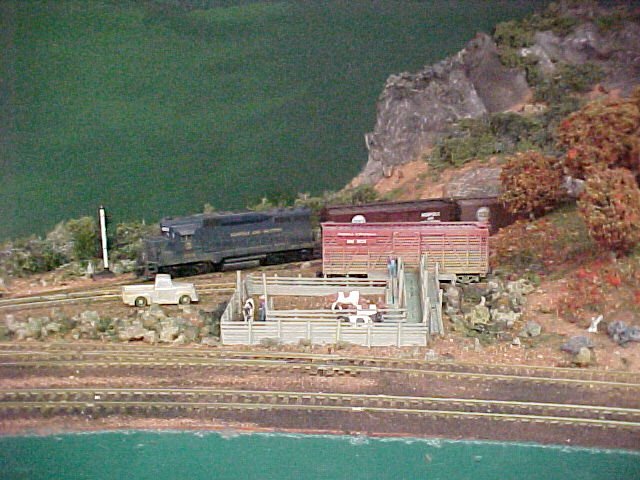
The top image is of McCormick Junction, West Virginia. The livestock pen is a part of McCormick farms, as is the apple grove. Cattle and meat products were not as prominent in the southeast as in the great plains, but southeastern railroads promoted heavily the opportunities of cattle for beef and dairy to farmers, citing the low freight costs for supplemental grain (especially corn) from the midwest. Farmers get a new source of income and the railroads get to carry grain to the farm and meats away.
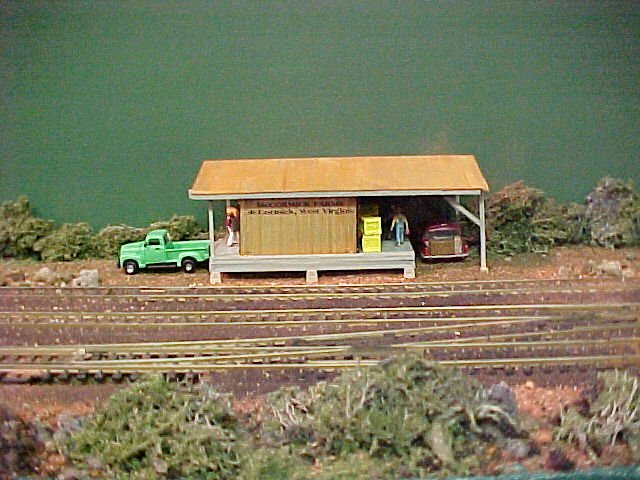
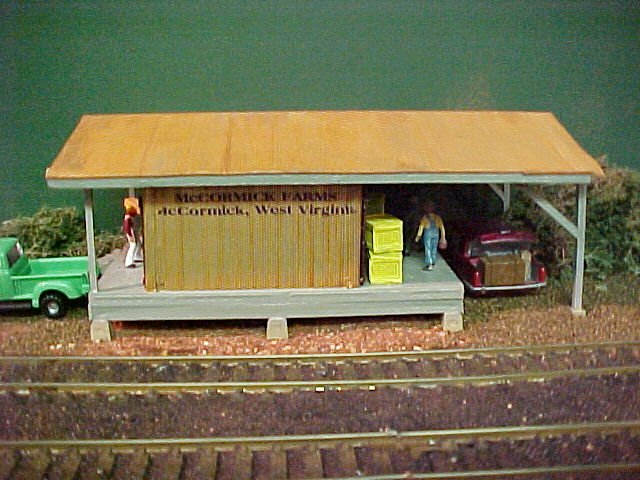
The middle and bottom images are of the McCormick Farms milk / produce shed. It is scratchbuilt and loosely modeled after a cucumber shed Clay saw near Faison, North Carolina. Produce was a small part of the revenue of most railroads in the southeast (except maybe for perishables from Florida) but often they were a big part of rail freight movements! A little shed like this can generate a lot of seasonal traffic for a layout. Also note, that Clay used a structure he saw as the prototype for this model, even though the cucumber shed was in a different state and for a single purpose. Clay was able to capture the flavor of a southeastern agricultural structure without having to find the exact prototype.
We modelers of past eras of southeastern model railroading often have to make do with "stand in's" or proxies because the rural and industrial southeast wasn't as widely photographed and documented as was other areas of the country. It wasn't the frontier of the West. It wasn't the second round of industrialization after the northeast and midwest. The southeast is likely to become the next favorite area for railroad modelers, much like it was the next favorite area for industrial and population growth! As they said on my favorite road: Look Ahead! Look South!